
In 2011, in a wiki on “coworking”, the “Coworking Manifesto” was first published in order to provide, the fundamental principles and guidelines that this new trend in work relations should bring.
The manifesto seems to be inspired by an already emerging trend of workplace organization that has its roots in both artists’ shared studios and the practice of renting space for work by mostly tech companies in the 1990s. In any case the term “coworking space” and its founding application is attributed to the developer Brad Neuberg who started the first such space in San Francisco, California, where Silicon Valley, the cradle of the online economy is located, in 2005.
It is no coincidence that the first space was launched with the project of freeing independent young tech professionals from the accelerating gentrification of the city’s Mission District. This first space that adopted this new way of working was a feminist collective, called Spiral Muse. Neuberg notes his relationship with open-source software as the inspiration for the foundation of the first coworking space. Although his project lasted about a year, the numbers of such structures doubled every year and by 2012, in the wake of the financial crisis, they reached about 2,000 worldwide.
The first coworking communities
As it is already obvious from the manifesto that went viral online in 2011, the first manifestations of coworking had a clear activist and mobilizing character with an emphasis on the concepts of community, cooperation, solidarity economy, anti-globalisation, sustainable ecosystem, and social bottom-up development. As the majority of researchers agree (de Peuter et al., 2017), coworking spaces were initially located on the margins of capitalist accumulation, had a community character and loose organizational structures.
Examples range from activist initiatives such as Jelly, started in a New York City apartment in 2006 for ‘casual work-togethers’, to formal companies that, at least initially, communicated the demands of the first organized coworkers, such as the now established The Hub with its motto ‘another world is happening’ (2017, p. 690). The social character of these early spaces can also be seen in the inspirations of the authors of the 2011 manifesto, Gangplank in Arizona and the “Centre for Social Innovation [CSI]” in Toronto, Canada. Gangplank speaks in its manifesto of ‘a new world to come’, which emphasizes ‘cooperation over competition’, while CSI commits itself to a vision of a ‘more equal world’ and promotes the values of inclusion and diversity.
This first antisystemic dynamic was short-lived since, especially after the 2008 – 2009 crisis, a structural shift of these spaces towards real estate business followed, while their number soared to thousands of spaces and millions of coworkers worldwide. However, there are always spaces keeping the community and solidarity vibe alive. Search for the one around the city you call home! If you are in Athens, don’t hesitate to visit us!
You may also like
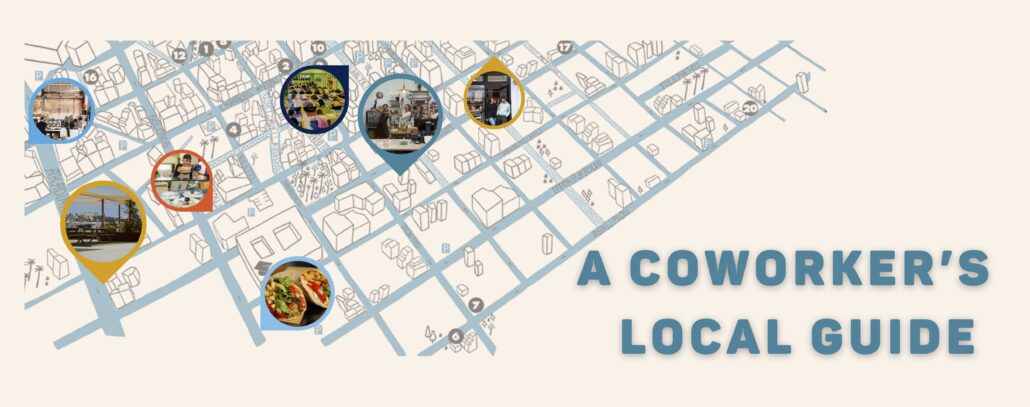
Our Community Guide to Local Stores Around Stone Soup Coworking
With these coworking tips and our guide to food and shops in the local area, your day at Stone Soup…
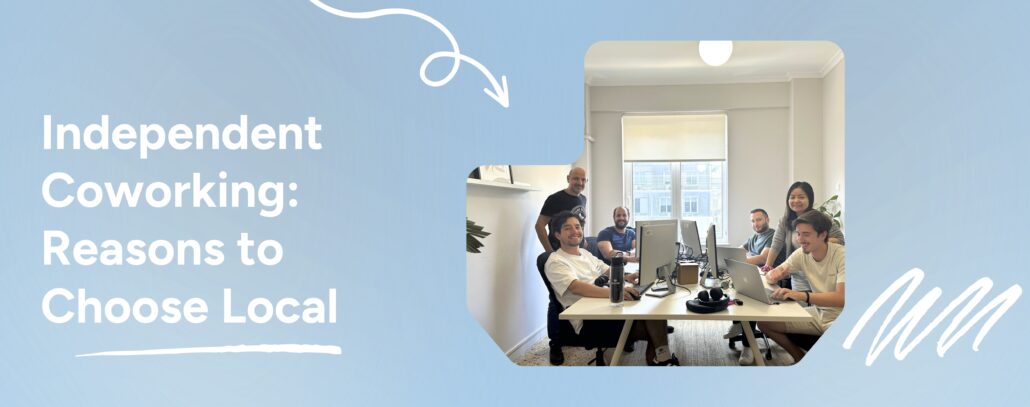
Independent Coworking: Reasons to Choose Local
Coworking has grown into something much bigger than we ever imagined. With over 40,000 spaces worldwide, around 80 spaces in…
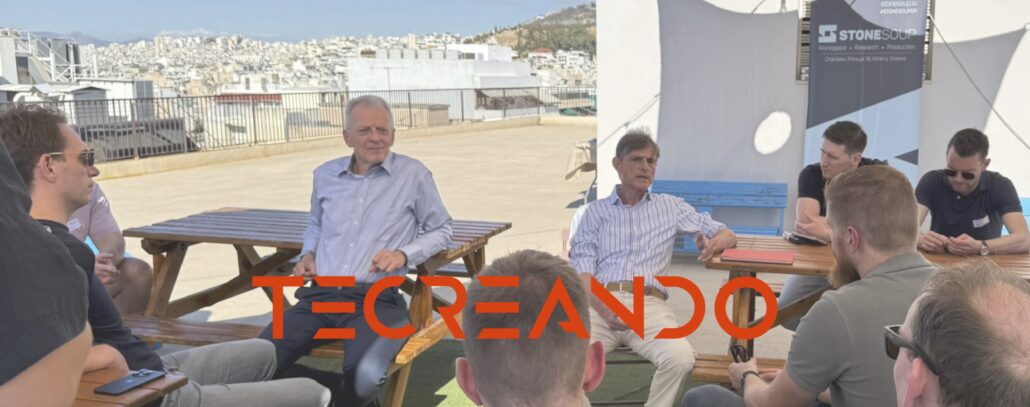
Turning research into startups with Tecreando
Some teams build loudly. Others build steadily, across borders, disciplines, and a lot of work behind the scenes. Tecreando belongs…